RUPHA Solar Launch: What It Means for Members and the Future of Healthcare in Kenya
A new opportunity for affordable, reliable and sustainable energy for RUPHA member facilities
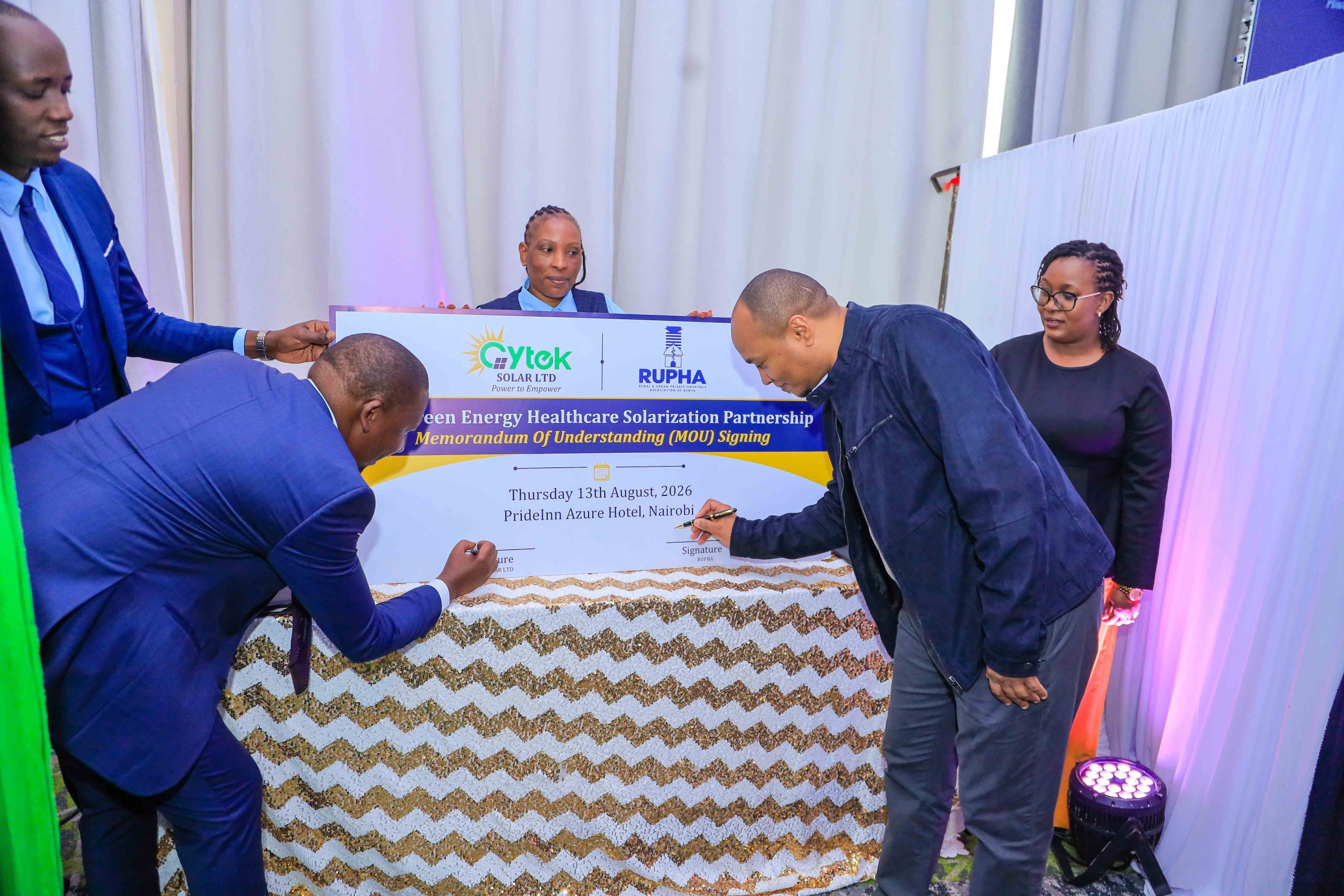
On 13 August 2026, the Rural & Urban Private Hospitals Association of Kenya (RUPHA) marked an important milestone in its commitment to strengthening private healthcare providers across the country with the official launch of RUPHA Solar, a strategic partnership with Cytek Solar Ltd.
Held at PrideInn Azure in Nairobi, the launch brought together healthcare facility owners, industry stakeholders and partners to introduce an initiative designed to address one of the persistent operational challenges facing healthcare providers: the rising cost of electricity and the need for reliable power.
For healthcare facilities, electricity is not simply an operational convenience. It is essential to the delivery of safe and continuous patient care. Diagnostic equipment, laboratory services, medical refrigerators, lighting, theatres and other critical hospital operations all depend on a reliable power supply.
Yet, for many independent healthcare facilities, the cost of electricity, generator fuel and equipment maintenance continues to place pressure on already constrained operating budgets.
RUPHA Solar was established to respond to this challenge and, more importantly, to demonstrate the practical value of belonging to an organised network of healthcare providers.
A Partnership Designed Around the Needs of Healthcare Providers
The RUPHA Solar launch represented more than the introduction of another renewable energy product. It marked the operationalisation of a partnership designed around the actual needs and financial realities of private healthcare facilities.
Through its partnership with Cytek Solar Ltd, RUPHA is facilitating access to quality solar energy solutions, technical expertise, facility energy assessments, preferential commercial packages and flexible financing arrangements.
The initiative emerged from engagement with RUPHA members, whose feedback highlighted considerable interest in adopting solar energy but identified the high initial installation cost as a major obstacle.
This insight informed the approach adopted under RUPHA Solar: making solar energy more accessible by addressing not only the technology requirement but also the financing challenge.
The programme therefore seeks to connect healthcare providers with solutions that match their energy consumption, operational requirements and financial capacity.
What the Launch Meant for RUPHA Members
One of the most important messages from the launch was the value of collective action.
Individual healthcare facilities often face difficulties negotiating favourable commercial terms with suppliers, accessing financing and obtaining technical solutions that are appropriate for their operations.
Through RUPHA, members can benefit from a coordinated approach that brings together healthcare providers, technology companies and financial institutions.
RUPHA Solar translates this collective strength into practical opportunities.
1. Better access to affordable solar solutions
RUPHA members can access preferential solar packages and negotiated commercial arrangements through the association’s partnership with Cytek Solar.
This creates an opportunity for facilities to explore solutions that may otherwise be difficult or expensive to access independently.
2. Flexible financing options
The cost of installing a solar system can be a significant barrier, particularly for smaller healthcare facilities.
RUPHA Solar introduces financing arrangements designed to reduce the burden of substantial upfront expenditure.
These include a KPLC-equivalent monthly payment arrangement, under which an agreed contribution is structured around the facility’s existing electricity expenditure, as well as bank-facilitated financing for facilities that prefer external funding.
The actual terms are determined by the facility’s energy requirements and the applicable financing agreement.
3. Improved energy reliability
Uninterrupted electricity is essential for maintaining critical healthcare services.
Solar installations, supported by appropriately designed backup solutions, can help facilities manage power interruptions and strengthen continuity of operations.
4. Better control of operating costs
Energy expenditure is a recurring operational cost. By exploring suitable solar solutions, facilities have an opportunity to reduce their dependence on conventional grid electricity and diesel generators.
This can support improved cost management and allow healthcare providers to plan their operational expenditure more effectively.
5. Access to technical expertise
The initiative also connects facilities with technical assessments and solar solution providers who can evaluate their energy requirements and recommend suitable systems.
This is important because healthcare facilities have different energy demands. A diagnostic centre, maternity hospital and larger inpatient facility will not necessarily require the same solar configuration.
Powering Healthcare Beyond the Electricity Bill
The significance of RUPHA Solar extends beyond the financial savings that participating facilities may achieve.
Reliable energy is directly connected to the quality and continuity of healthcare services.
Consider a facility providing maternity services, laboratory testing, outpatient care and emergency treatment. An unexpected power interruption can disrupt several operations simultaneously.
Medical equipment may become unavailable, laboratory processes may be interrupted, refrigerated supplies may be exposed to temperature fluctuations and healthcare workers may have to rely on alternative power sources.
For facilities serving rural and medically underserved communities, these challenges can be particularly difficult.
By facilitating access to more reliable energy solutions, RUPHA Solar contributes to a broader objective: strengthening the operational resilience of healthcare facilities and supporting their ability to serve their communities.
It also creates an opportunity for healthcare providers to embrace cleaner energy alternatives and contribute to more environmentally sustainable healthcare operations.
The Power of RUPHA Membership: Turning Collective Strength into Practical Benefits
Perhaps the most important lesson from the RUPHA Solar launch is what it demonstrates about the value of membership in the association.
RUPHA membership is not simply about belonging to a professional network or participating in industry engagements. It is about creating opportunities that individual healthcare facilities may find difficult to secure independently.
Through collective representation, strategic partnerships and negotiated arrangements, RUPHA seeks to improve the operating environment for its members.
RUPHA Solar is one example of this approach in action.
The initiative demonstrates how an association can identify a common challenge affecting its members, engage an appropriate industry partner and develop a structured programme to address that challenge.
For members, this means access to opportunities in areas such as:
- Negotiated commercial arrangements with strategic partners.
- Access to financing and investment opportunities.
- Affordable technology and operational solutions.
- Industry knowledge and technical support.
- Collective advocacy on issues affecting healthcare delivery.
- Partnerships that support the long-term sustainability of healthcare facilities.
The value of these initiatives is particularly significant for independent hospitals and smaller facilities that may not have the negotiating power or resources of larger hospital networks.
Through RUPHA, facilities can participate in a broader network that creates opportunities for collaboration, shared benefits and collective growth.
A Step Towards More Sustainable Healthcare Facilities
The healthcare sector requires continuous investment, but that investment must extend beyond clinical infrastructure and medical equipment.
Energy management, digital systems, facility administration, human resources and financial sustainability are all important components of an effective healthcare institution.
RUPHA Solar recognises that strengthening healthcare delivery also requires addressing the operational foundations that make healthcare services possible.
As Kenya continues advancing its Universal Health Coverage agenda, the resilience of private healthcare providers will remain an important consideration.
Facilities must be able to manage their operating costs, maintain essential services and invest in the resources required to provide quality care.
Strategic partnerships such as RUPHA Solar demonstrate how collaboration between healthcare associations and private-sector partners can contribute to these objectives.
Looking Ahead: More Opportunities for RUPHA Members
The launch of RUPHA Solar marks an important step in RUPHA’s broader commitment to developing partnerships that deliver practical benefits to member facilities.
The association will continue working with strategic partners to identify opportunities that respond to the operational, financial and technical challenges facing private healthcare providers.
For facilities interested in exploring solar energy, the programme provides an opportunity to assess their energy requirements, understand the available solutions and identify suitable financing arrangements.
RUPHA encourages its members to engage with the association and take advantage of the opportunities created through this partnership.
The message from RUPHA Solar is clear: when healthcare providers come together, they can unlock opportunities that are difficult to achieve individually.
By bringing members and strategic partners together, RUPHA is working towards a stronger, more resilient and more sustainable private healthcare sector in Kenya.
About RUPHA
The Rural & Urban Private Hospitals Association of Kenya (RUPHA) is a non-profit organisation representing private healthcare facilities operating in rural areas and urban areas serving medically underserved populations across Kenya.
Through advocacy, partnership development, capacity building and collective initiatives, RUPHA works to strengthen healthcare providers and improve the quality and accessibility of healthcare services in underserved communities.
Interested in RUPHA Solar?
RUPHA members and interested healthcare facilities can contact the association to express interest, request a facility energy assessment and explore available solar solutions and financing arrangements.
Rural & Urban Private Hospitals Association of Kenya (RUPHA)
Website: https://rupha.co.ke
Email: info@rupha.co.ke
Phone: 0757 626 748 / 0794 673 821